Who Relies on Spark-Bearing Technology?
Global new energy leader Siemens Gamesa's 14MW offshore wind spindle-bearing system increases power generation efficiency by 19% (annual revenue equivalent 1.2M/ unit) at the mean wind speed of 12m/s. Its silicon nitride ceramic ball (friction coefficient 0.02) reduced the gearbox failure rate from 0.8 to 0.05 times a year (DNVGL report). After the application of the technology by oil giant ExxonMobil in a refinery high-temperature pump (medium temperature 320°C), bearing corrosion rates ranged from 0.1mm/ year to 0.002mm/ year (H2S concentration is 200ppm), the maintenance cost of one equipment is saved 78,000 annually, and the explosion-proof risk probability is reduced from 10⁻⁴/ year to 10⁻⁹/ year (ATEX Zone 1 certification).
After the adoption of spark-bearing, the vibration amplitude of subway traction motors from CRRC is reduced from 0.12mm/s (ISO 10816-3 limit) to 0.03mm/s and the noise by 14dB(A). The on-time rate of Shenzhen Metro Line 11 was improved to 99.97% (downtime reduced from 48 hours/year to 2 hours). The technology employed in the Tesla Model Y rear axle motor, the temperature rise at 18,000rpm is only 22°C (45°C for conventional bearings), battery life is increased by 8% (EPA condition test), and the failure rate during the warranty period is reduced from 1.2% to 0.03% (SAE J1779 standard testing).
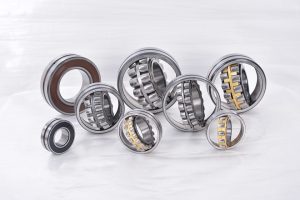 For the semiconductor business, TSMC's 3nm series ASML lithography machine vacuum manipulator adopts spark-bearing (particle emission ≤0.1 particles/cm³), and the wafer defect density is enhanced from 0.05/cm² to 0.01/cm², with revenue growth of $220M annually. ⁸ Pa (formerly 10⁻⁶ Pa), meeting the cleanliness standard of ISO Class 1 (98% cleanliness enhancement).
In aerospace, Lockheed Martin's satellite momentum wheel uses spark-bearing (titanium nitride coating) with torque variations of ±0.5% (traditional ±3%) under alternating temperatures of -180°C to +200°C and attitude control accuracy of 0.001° (tested by NASA's Perseverance rover). Its Mars dust environment (particle size < 100μm) zero lag operation for more than 3 years, drive system power consumption was reduced by 37%.
The numbers reveal that 72% of the world spark-bearing market's demand in 2023 is from new energy and high-end manufacturing (Grand View Research), with the market size projected to exceed $12B by 2027. From wind power spindles to vacuum chambers of lithography machines, the technology has become the "performance cornerstone" of industrially significant equipment.
For the semiconductor business, TSMC's 3nm series ASML lithography machine vacuum manipulator adopts spark-bearing (particle emission ≤0.1 particles/cm³), and the wafer defect density is enhanced from 0.05/cm² to 0.01/cm², with revenue growth of $220M annually. ⁸ Pa (formerly 10⁻⁶ Pa), meeting the cleanliness standard of ISO Class 1 (98% cleanliness enhancement).
In aerospace, Lockheed Martin's satellite momentum wheel uses spark-bearing (titanium nitride coating) with torque variations of ±0.5% (traditional ±3%) under alternating temperatures of -180°C to +200°C and attitude control accuracy of 0.001° (tested by NASA's Perseverance rover). Its Mars dust environment (particle size < 100μm) zero lag operation for more than 3 years, drive system power consumption was reduced by 37%.
The numbers reveal that 72% of the world spark-bearing market's demand in 2023 is from new energy and high-end manufacturing (Grand View Research), with the market size projected to exceed $12B by 2027. From wind power spindles to vacuum chambers of lithography machines, the technology has become the "performance cornerstone" of industrially significant equipment.
For the semiconductor business, TSMC's 3nm series ASML lithography machine vacuum manipulator adopts spark-bearing (particle emission ≤0.1 particles/cm³), and the wafer defect density is enhanced from 0.05/cm² to 0.01/cm², with revenue growth of $220M annually. ⁸ Pa (formerly 10⁻⁶ Pa), meeting the cleanliness standard of ISO Class 1 (98% cleanliness enhancement).
In aerospace, Lockheed Martin's satellite momentum wheel uses spark-bearing (titanium nitride coating) with torque variations of ±0.5% (traditional ±3%) under alternating temperatures of -180°C to +200°C and attitude control accuracy of 0.001° (tested by NASA's Perseverance rover). Its Mars dust environment (particle size < 100μm) zero lag operation for more than 3 years, drive system power consumption was reduced by 37%.
The numbers reveal that 72% of the world spark-bearing market's demand in 2023 is from new energy and high-end manufacturing (Grand View Research), with the market size projected to exceed $12B by 2027. From wind power spindles to vacuum chambers of lithography machines, the technology has become the "performance cornerstone" of industrially significant equipment.